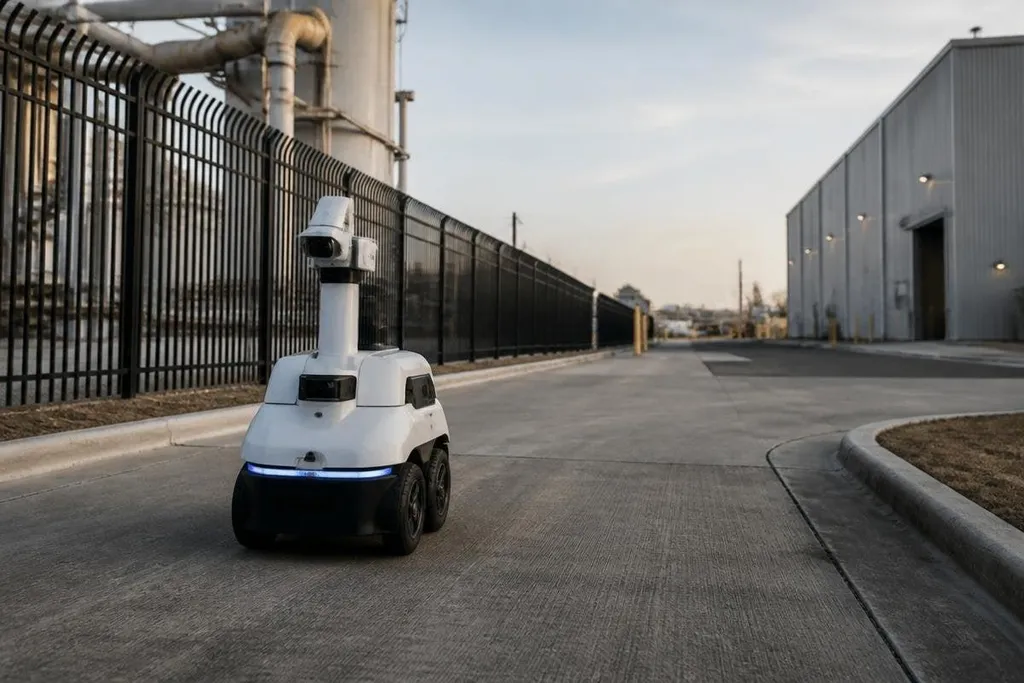
A surveillance robot can patrol a site, send video to an operator, and return to its charger without a person walking the route. That makes it useful for places where cameras miss moving events or staff cannot watch every area at once.
- Patrol robots combine cameras with movement across a site.
- Remote operators still handle many uncertain events.
- A useful trial needs clear routes, alerts, and response rules.
What the robot adds
Fixed cameras watch the same view all day. A mobile robot changes the view by moving through a yard, warehouse, parking area, or building. Its camera can inspect gates, doors, storage areas, and other points that need attention at set times.
It may also carry thermal cameras, microphones, LiDAR, or other sensors. LiDAR measures distance with light pulses, helping the robot build a map and avoid objects. The exact sensor set matters because a camera can show a person, while thermal sensing may show heat in low light.
That movement changes the job for a security team. An operator can receive an alert when the robot sees motion in a restricted zone, then check the video before sending a guard or calling site staff.
The robot gathers the first view; a person decides what the event means.
Why sites are testing them
Large sites create a simple coverage problem. A guard on one side of a property cannot inspect a loading gate on the other side at the same moment. A robot can run a scheduled route and send back a record of what it saw.
The same system can repeat a task at night, in rain, or during a quiet shift. That does not remove the need for people. It shifts some work from walking and watching toward checking alerts, handling exceptions, and responding to events.
Labor is part of the discussion, but the public evidence needed for a fair cost case is often missing. A buyer needs the robot price, charging setup, support fees, network costs, and the number of staff hours saved. Without those figures, claims about savings are guesses.
A patrol robot’s price means little until you know what its cameras, speakers, and operator link can do on site. Reporting from Robot 24 can place those details beside the patrol area, test date, and staff role, so you can judge the bill against work the robot handles before the next section looks at where the system can fail.
Where the system can fail
A robot can lose its route when a temporary barrier blocks a path. Wet floors, poor lighting, network outages, and crowded spaces can also change what its sensors see. The site needs a person who can check the alert and a clear way to stop the robot.
Privacy needs the same care. Cameras and microphones can record workers, visitors, delivery drivers, or people outside the site boundary. A trial should define where the robot may travel, what it records, who can view the data, and when the system deletes it.
An alert also has a limit. Motion near a fence may be a person, an animal, a loose sheet, or a change in light. The robot can report the event, but it cannot supply the full reason on its own.
How to judge a trial
A short test tells you more when the site sets rules before the robot arrives. Use this checklist:
- Map the route: Mark doors, ramps, narrow paths, charging points, and areas the robot must avoid.
- Set alert rules: Write down which events need a message, a live video check, or an on-site response.
- Measure false alerts: Count alerts by cause, then separate people from animals, weather, objects, and sensor errors.
- Check the data: Record storage time, access rights, camera views, and any export of footage.
- Test failure recovery: Cut the network, block a route, and stop the robot to see how staff respond.
- Price the full system: Add hardware, installation, software, repairs, training, and staff time.
The most useful result is a record of completed patrols and missed events, not a smooth demonstration. Ask how many routes the robot finished, how often a person intervened, and which alerts turned out to need action.
What happens next
Surveillance robots will earn wider use when buyers can compare those records across sites. Until then, treat them as mobile sensor platforms with human review, not as replacements for a security team; I'd skip any trial that cannot state its patrol area, data rules, response plan, and full cost.